Minor issues like localized cracks or small punctures typically require only professional repair, but a full siding repair vs replacement Utah assessment often favors replacement if damage covers more than 20 percent of the home. Replacing the siding is essential when widespread warping, mold growth, or structural moisture issues occur; these signs indicate the material can no longer protect against Utah's harsh freeze-thaw cycles.
As a Utah homeowner, watching your siding buckle under the weight of the Uintah Basin's extreme temperature swings is more than just an aesthetic concern; it is a threat to your home's structural integrity. The relentless cycle of freezing winters and high desert summers forces a difficult question upon every property owner. Should you patch the visible cracks or invest in a full exterior replacement? This decision impacts your long term maintenance costs and energy efficiency. In this guide, we examine the specific indicators that dictate whether a repair is sufficient or if a total installation is necessary. We will also provide a practical freeze thaw prevention checklist, compare material durability in local conditions, and navigate the complexities of insurance claims. By the end, you will have a clear strategy to protect your investment against the unique environmental stressors of the Beehive State.
The Utah Climate Challenge: Why Your Siding Struggles in the Uintah Basin
Homeowners in Duchesne and the Uintah Basin deal with a high desert environment that is notoriously unforgiving to building envelopes. Unlike humid regions where moisture is a constant, ambient threat, our climate creates stress through extreme fluctuations. The primary driver of damage here is the cycle of expansion and contraction. During a typical Utah summer day, siding temperatures can soar, causing materials to expand significantly; by nightfall, temperatures plummet, forcing a rapid contraction. Over time, this mechanical stress leads to buckling in vinyl and splitting in wood.
The freeze-thaw cycle adds another layer of complexity. When snow melts during the day, water finds its way into microscopic cracks or behind loose panels. As the temperature drops below freezing at night, that water expands by roughly 9 percent, widening the gaps and leading to moisture spalling. In fiber cement or masonry products, this can cause the outer layers to flake or peel away, eventually exposing the substrate to rot.
Furthermore, Utah’s intense dry heat and UV exposure degrade sealants and caulking far faster than in more temperate climates. Once these seals fail, the barrier between your home and the elements is compromised. This environmental reality makes the decision regarding siding repair vs replacement Utah a matter of structural necessity rather than just aesthetics. We provide versatile residential services to address these specific issues before they lead to interior damage. Understanding these stressors is the first step in a Utah winter home maintenance checklist and helps in planning energy efficient home improvements that actually withstand local conditions.
Siding Repair vs Replacement: Signs You Should Not Ignore
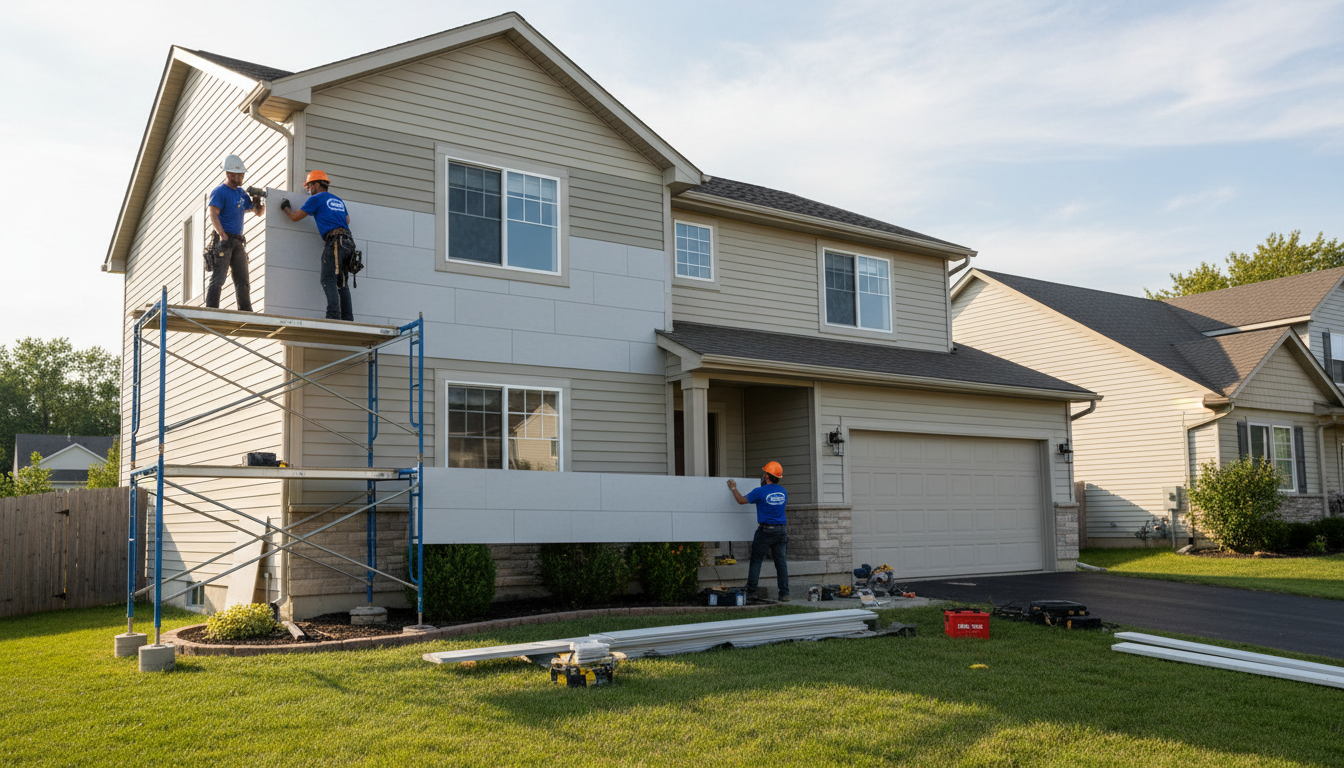
Determining the correct path forward requires distinguishing between localized blemishes and systemic failure. When evaluating siding repair vs replacement Utah, the scope of the damage usually dictates the most cost-effective solution. Homeowners can often opt for repair when dealing with isolated issues such as a single loose panel, a small puncture from landscaping equipment, or minor cracks that have not yet allowed moisture to penetrate the building envelope.
It is possible to replace just a few pieces of siding, especially in cases of impact damage or a small area of rot. However, this approach carries two caveats. Finding an exact color match for aged siding is difficult due to UV fading; even the original manufacturer's color may look out of place against sections that have weathered the Utah sun for years. Furthermore, replacing a few boards may reveal more extensive issues hiding beneath the surface. If the damage extends beyond a localized area, a patch job is merely a temporary fix that masks deeper problems.
Replacement becomes the necessary choice when performance indicators fail across a significant portion of the home. Watch for these red flags: - Widespread warping or buckling that suggests the fastening system has failed due to expansion cycles. - Mold or mildew growth appearing behind panels, indicating trapped moisture that cannot evaporate. - Bubbling paint or interior water stains, which signal that the siding is no longer providing a moisture barrier. - Significant spalling at the edges of fiber cement, where moisture has compromised the material core.
We generally apply the 20% Rule during inspections. If more than 20 percent of your home's exterior shows signs of failure, rot, or significant damage, the labor costs for piecemeal repairs will likely exceed the long-term value. In these instances, a full replacement offers a superior return on investment by ensuring the entire structure is sealed against the Uintah Basin’s harsh environment, while also providing an opportunity for energy efficient home improvements like adding an integrated weather-resistive barrier or updated insulation.
Cost Comparison for Utah Homeowners: Repair vs Full Installation
Once you have identified the extent of damage using the 20% rule, the next logical step involves budgeting. In the Uintah Basin, basic siding repairs typically range from $300 to $1,000. This cost generally covers labor and materials for localized fixes such as securing loose panels, replacing a few punctured vinyl slats, or resealing compromised flashing. While these small investments can extend the life of your exterior, they do not address underlying insulation issues or systemic wear caused by years of exposure to the Utah sun.
For homeowners considering a full overhaul, the following table breaks down the current 2026 cost expectations for professional installation in our region:
Siding Material | Cost per Square Foot (Installed) | Typical Lifespan (Years) |
|---|---|---|
Vinyl | $3 to $12 | 20 to 40 |
Fiber Cement | $6 to $15 | 50 to 75 |
Aluminum | $3 to $7 | 20 to 40 |
Wood | $3 to $30 | 20 to 40 |
A full installation represents a more significant upfront commitment; however, current market data suggests this is often the more strategic financial move for long-term property value. Beyond the immediate boost in curb appeal, a complete tear-off allows for the inspection of the home’s sheathing and the installation of a modern weather-resistive barrier. In our high desert climate, these are essential energy efficient home improvements that mitigate the thermal transfer responsible for high utility bills. When weighing siding repair vs replacement Utah, factor in that full replacements typically include comprehensive manufacturer warranties. These protections offer a level of security against the Uintah Basin’s volatile weather that a simple patch simply cannot match.
The Utah Freeze-Thaw Prevention Checklist
Preventative maintenance is the most effective way to avoid the difficult choice between siding repair vs replacement Utah homeowners face after a harsh winter. Before the first deep freeze in the Uintah Basin, conduct a thorough exterior audit to identify vulnerabilities where water might infiltrate and expand. Use this checklist to harden your home’s exterior against the upcoming cycle:
Seal the Perimeter: Inspect the caulking around all windows, doors, and vents. Utah’s dry heat causes sealants to shrink and crack over time. Replace any brittle or pulling material with high grade, flexible sealants to prevent moisture from seeping behind the panels.
Clear the J-Channels: These trim pieces hold the siding in place around openings. Remove dirt, pine needles, or leaves that have accumulated in the channels. Debris traps water; when that water freezes, it can pop the siding off its tracks or cause mechanical failure in the fastening system.
Redirect Irrigation: Ensure your sprinkler heads are adjusted so they do not spray directly onto the siding. Constant water exposure during the summer weakens the material, making it more susceptible to cracking during winter expansion and contraction.
Audit Gutter Connections: Inspect where the siding meets the gutter line. Blocked gutters lead to ice dams, which force water upward and behind the siding. Ensuring a clear path for meltwater is a critical part of any Utah winter home maintenance checklist.
Proactive steps now reduce the need for versatile residential services later in the season. Addressing these small details preserves the integrity of your energy efficient home improvements and prevents localized moisture damage from becoming a systemic failure.
Material Spotlight: Low Maintenance Siding for the High Desert
Selecting the right material is the most critical factor when evaluating siding repair vs replacement Utah homeowners must eventually navigate. In the high desert of the Uintah Basin, low maintenance siding needs to resist both intense UV desiccation and extreme sub-zero temperatures.
Fiber cement, often sought out for its specific Hardie siding maintenance requirements, remains a regional favorite. Because it is composed of cement, sand, and cellulose fibers, it provides a Class A fire rating, which is vital for rural properties prone to brush fires. Hardie siding maintenance is minimal compared to wood; it typically only requires a fresh coat of high quality acrylic paint every 10 to 15 years to maintain its moisture barrier. Its dimensional stability prevents the warping often seen in other materials during 40 degree diurnal temperature swings.
Metal siding is gaining significant traction in West Valley City and rural Utah due to its unparalleled longevity. Architectural steel and aluminum are virtually impervious to the moisture spalling and rot that plague traditional exteriors. While vinyl serves as a common entry level option, its tendency to become brittle under the Utah sun makes it less resilient over decades.
Material | Primary Advantage | Maintenance Requirement | Expected Lifespan |
|---|---|---|---|
Fiber Cement | Fire & Heat Resistance | Periodic painting/caulking | 50+ Years |
Metal (Steel) | Maximum Durability | Occasional cleaning | 40 to 60 Years |
Vinyl | Low Initial Cost | Wash down only | 20 to 40 Years |
Investing in these high performance materials through our versatile residential services ensures that your energy efficient home improvements remain intact long after the next Utah winter home maintenance checklist is completed.
Does Homeowners Insurance Cover Siding Damage in Utah?
Determining if insurance covers the cost of siding repair vs replacement Utah homeowners face depends primarily on the "cause of loss" identified in your policy. Standard homeowners insurance generally covers damage that is sudden and accidental. In the Uintah Basin, this typically includes impact damage from severe hailstorms, fallen trees, or high wind events that tear panels away from the substrate.
Insurance typically excludes damage classified as a maintenance issue or gradual wear and tear. Problems such as moisture spalling, rot caused by neglected gutters, or UV desiccation are considered preventable through a consistent Utah winter home maintenance checklist. If the siding has reached the end of its functional lifespan due to the 20 percent rule mentioned previously, the cost of replacement falls on the homeowner.
To improve the likelihood of a successful claim, document your home’s exterior immediately following a storm. Capture clear, dated photos of all elevations to provide evidence of sudden impact. Our team provides versatile residential services that include technical assessments, helping you understand whether your siding failure is an insurable event or a necessary part of energy efficient home improvements.
Why Professional Coordination Matters for Exterior Projects

Selecting between siding repair vs replacement Utah homeowners must realize that exterior systems are interdependent. A damaged panel is often the symptom of a failing gutter or an improperly flashed roofline. As a multi-trade provider, Atiy LLC utilizes technical expertise to identify these root causes rather than just masking visible damage.
Our structured workflow ensures that each project phase, from moisture barrier inspection to final trim, aligns with manufacturer specifications. Professional installation is mandatory to maintain long term product warranties, which are easily voided by improper fastening or inadequate clearance. By choosing versatile residential services, you ensure that your energy efficient home improvements are part of a cohesive, weather tight system. This comprehensive approach is a vital final step on any Utah winter home maintenance checklist, ensuring every component works together to protect the structure.
Understanding when to repair or replace your siding is essential for protecting your Utah home from the damaging effects of freeze-thaw cycles. Whether you are dealing with minor cracks or significant moisture infiltration, taking prompt action ensures long-term durability. If you want expert help assessing the current state of your exterior, Atiy LLC provides detailed inspections and professional solutions. You can view our full range of siding services to determine which option best fits your home and budget.